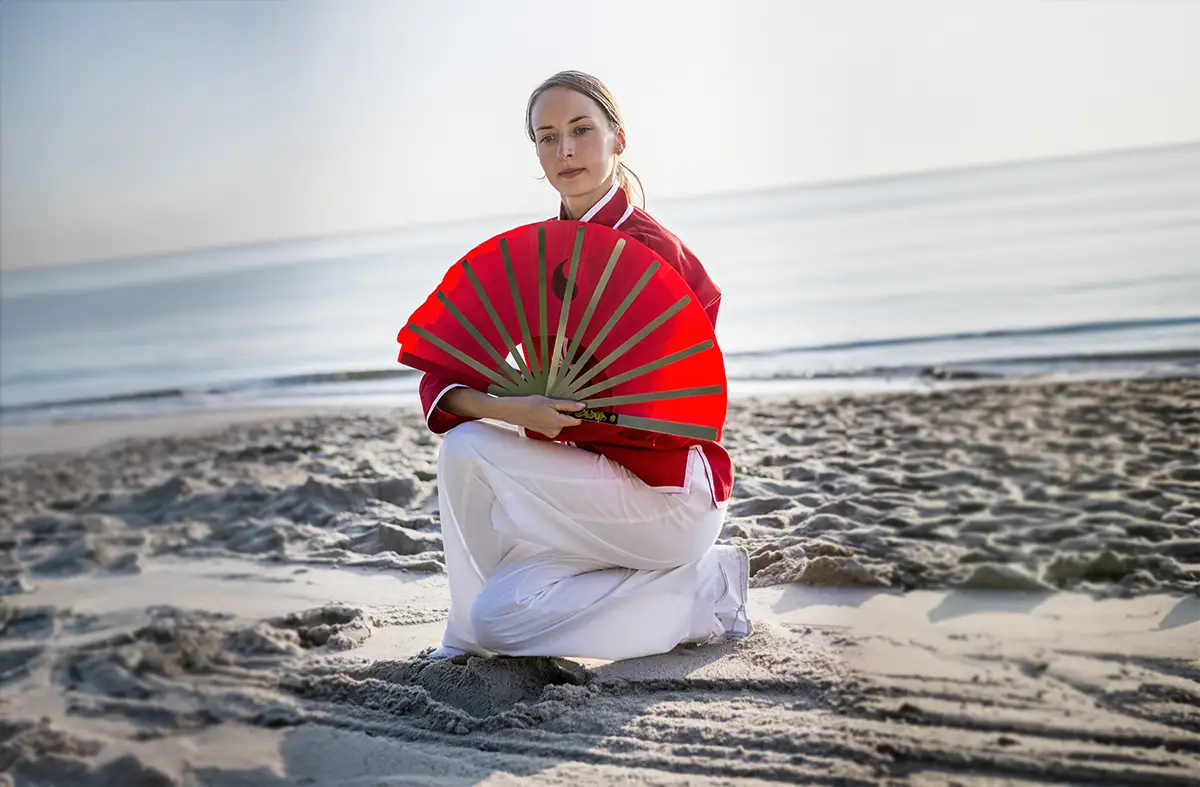
We invite you to learn the art of Tai Chi. Tai Chi is an exercise with gentle and flowing movements affecting the bones, muscles joints, as well as the internal organs and the mind. It is therefore a mind-body exercise that combines set movements with relaxation and breathing. Tai Chi is often described as meditation in motion, as by performing gentle, slow movements together with deep breathing you can feel that you are in an altered state of consciousness filled with peace and balance of body and mind.
Properties and range of action of the art of Tai Chi:
1. Relieves persistent back pain.
2. Helps with painful joints and arthritis.
3. Improves lung function by reducing nitric oxide excretion.
4. Helps oxygen flow to the lungs and control asthma.
5. Helps people suffering from osteoarthritis.
6. Improves balance and prevents falls in older people.
7. Reduces pain and improves physical and mental health in people with fibromyalgia.
8. Contributes to an increase in the number of stem cells.
9. Regular Tai Chi exercise delays bone mass loss.
10. Increases flexibility.
11. Increases muscle strength.
12. Reduces the risk of cardiovascular disease.
13. Reduces oxidative stress.
14. Tai Chi practice contributes to increased brain volume in seniors.
15. Helps with chronic lung disease by improving lung function.
16. Helps with hypertension.
17. Improves exercise capacity.
18. Increases the ability of the nerves and the speed at which signals are sent back to the brain and spinal cord.
19. Stimulates the connections between the muscles in the body and between the muscles and the mind and thus improves the quality of life for people with peripheral neuropathy.
20. Strengthens the functions of the respiratory and cardiovascular systems.
21. Restores the balance of the immune system.
22. Tai Chi practice can be used as convalescence after illness.
23. Tai Chi exercises can enhance modulation of the vagus nerve (The vagus nerve acts as a link between the peripheral autonomic nervous system and the brain. It also facilitates the storage of memories. Stimulation of the vagus nerve has the effect of increasing brain plasticity and memory. In addition, the vagus nerve also has a strong effect on the immune system, heart rate variability, blood sugar control, development and modulation of headaches, voice pitch, bronchial function, appetite control and depression control).
24. Reduces cardiovascular risk factors in dyslipidaemic patients.
25. Tai Chi practice lowers HbA1c levels, increases the number of T lymphocytes and reduces cytotoxic T lymphocytes.
26. Acts to relieve pain.
27. Improves the quality of sleep.
28. Improves digestion.
29. Strengthens immunity.
30. Increases energy.
31. Alleviates shortness of breath.
32. Reduces anxiety.
33. Improves mood.
34. Improves concentration.
35. Tai Chi exercises improve memory.
36. Increases activation of the prefrontal cortex in older people.
37. Reduces stress.
38. Reduces depression by modulating autonomic nervous system parameters or heart rate variability.
39. Practising Tai Chi effectively activates the brain to work more effectively such as a more efficient memory, faster processing of information, more efficient communication between different parts of the brain and also delays the ageing process of the brain.
40. Synchronises the cerebral hemispheres.
41. Practising Tai Chi increases alpha wave activity.
42. Improves balance and mental and neuropsychological functioning.
43. Tai Chi, show a significant reduction in the production of NF-kB factor and related cytokines, which contributes to the reduction and reversal of pro-inflammatory gene expression.
44. It has a positive effect on mental wellbeing.
45. Tai Chi training has a positive effect on the brain’s white matter network and cognitive performance.
Who is Tai Chi for?
Tai Chi is a moderate exercise that can be practised by everyone regardless of age, weight and physical condition and can therefore be easily adapted for people with different needs. This practice can be done by children, adolescents adults and even people who have difficulty walking, such as the elderly or people of various ages after illnesses and who move with crutches, walking frame or even for people who do not walk at all but use wheelchairs. Tai Chi exercises give strength as well as energy and are not exhausting, thus making those exercising happier.
The cost of a 1.5 hour individual Tai Chi lesson is £50.
The cost of a 1.5 hour Tai Chi lesson for two people is £80.
How to prepare for Tai Chi training?
Comfortable sportswear and soft sports shoes with thin soles such as trainers shoes are recommended, so that you can stand on your toes with ease, you can also practice without shoes in socks.
When and where can I benefit from Tai Chi training?
Tai Chi training takes place in Lutterworth and the day and time will be selected individually.
How do I sign up for Tai Chi training?
To sign up for Tai Chi training please email info@centreofrelax.com